What to know about fly tipping rules Hounslow Council fines
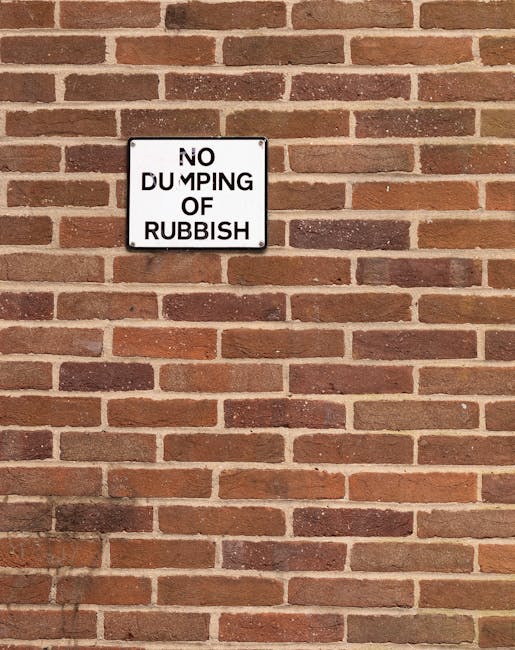
If you have ever left a bag, mattress, old chair, or builder's rubble "just for a moment" and wondered whether it could count as fly tipping, you are not alone. The rules around fly tipping in Hounslow can feel surprisingly strict, and the fines can become expensive very quickly. This guide explains what to know about fly tipping rules Hounslow Council fines in plain English, so you can avoid trouble, protect your home or business, and deal with waste the right way the first time.
Whether you are clearing a flat, emptying a loft, dealing with garden waste, or handling business rubbish, the safest approach is to understand what counts as fly tipping, who may be liable, and what practical steps keep you compliant. Let's face it, waste disputes are the sort of headache nobody wants at the end of a busy week.
Why what to know about fly tipping rules Hounslow Council fines matters
Fly tipping is not just an eyesore. It creates costs, stress, and real risk for residents, landlords, tradespeople, and local businesses. In a busy borough like Hounslow, where streets, estates, shared access areas, and commercial premises all generate waste, a small mistake can quickly turn into a formal investigation or a fixed penalty.
The key issue is responsibility. If waste is found dumped somewhere it should not be, the council may look at who produced it, who handled it, and whether a waste carrier was used properly. That means "I didn't know" is rarely a helpful defence. Truth be told, many people only learn this after a fine lands on the doormat.
It also matters because fly tipping often starts with ordinary jobs: a wardrobe left near a skip, renovation waste piled beside a fence, or a van-load of rubbish abandoned because a cheap remover was used. If you are doing a larger clear-out, services such as house clearance or home clearance can be a more controlled way to keep everything documented and removed properly.
Practical takeaway: if you are unsure whether waste is being stored, moved, or handed over lawfully, pause and check before you leave it anywhere. That one pause can save a lot of hassle.
How what to know about fly tipping rules Hounslow Council fines works
At a basic level, fly tipping means dumping waste unlawfully on land that does not have permission to receive it. That could be a pavement, verge, alleyway, private land, communal area, or even the wrong spot on land you thought was acceptable. The details matter, which is annoying, but important.
Hounslow Council can investigate incidents using visible evidence such as labels, addresses, receipts, CCTV, vehicle details, witness statements, or patterns that connect waste to a household or business. In practice, they may try to identify the person or organisation responsible, and if they can, a fine may follow. In some cases, waste can also lead to further enforcement action.
There are a few different scenarios:
- Household waste dumped unlawfully: usually linked to a resident, tenant, or person who arranged disposal.
- Commercial waste fly tipped: can involve a business, contractor, or someone acting for the business.
- Builder's or renovation waste: often becomes a problem when a contractor leaves debris behind or uses an unlicensed carrier.
- Misplaced bulky items: a sofa, fridge, or mattress left by bins or on shared land can be treated as dumped waste if not collected correctly.
If you are dealing with bulky household items, it may help to use a service designed for specific material streams, such as furniture disposal or furniture clearance, rather than trying to improvise with kerbside placement. Improvising sounds easy at 6pm. It is less fun at 9am when the item is still there and a neighbour has already complained.
One more thing: a fine is only part of the story. The bigger risk is being left with the clean-up cost and the time cost, too. Waste does not move itself. Unfortunately.
Key benefits and practical advantages
Understanding the rules is not just about avoiding penalties. It also makes waste handling simpler, cleaner, and less stressful. Once you know the basics, decisions become faster and better.
- You reduce the risk of fines: no surprise notices, no awkward calls, no unnecessary expense.
- You protect your reputation: especially useful for landlords, trades, shops, offices, and managing agents.
- You save time: clear disposal plans are quicker than fixing a bad one.
- You keep shared areas tidy: important for flats, terraces, estates, and commercial properties.
- You improve trust with neighbours and tenants: people notice when waste is handled responsibly.
There is also a practical commercial benefit. If your business handles waste regularly, a proper routine can stop the "just put it there for now" habit from creeping in. That habit causes more trouble than people expect.
For larger recurring needs, it can be more efficient to plan ahead with business waste removal or a regular waste removal arrangement. The right setup lowers the chance of accidental non-compliance and keeps your site looking presentable.
Who this is for and when it makes sense
This topic matters to more people than you might expect. It is not just for someone who has already been fined. It is for anyone who handles waste in Hounslow and wants to avoid getting caught out.
- Homeowners clearing garages, lofts, sheds, or gardens
- Tenants leaving a property and disposing of unwanted items
- Landlords dealing with end-of-tenancy waste
- Flat residents using shared bins, communal hallways, or bin stores
- Builders and tradespeople handling rubble, timber, plasterboard, or packaging
- Offices and shops removing desks, stock, packaging, or clearance waste
- Families managing an inherited property or a large emotional clear-out
It also makes sense if you are short on time. A lot of fly tipping happens because people are rushed. A van is booked, the skip is full, the weather is grim, someone needs to get to work, and the rubbish ends up in the wrong place. Sound familiar? Exactly.
If your job includes clearing awkward spaces, you may want to look at specialist options like loft clearance, garage clearance, or garden clearance. These services can make it easier to keep the waste flow controlled rather than pieced together in a hurry.
Step-by-step guidance
If you want to stay on the right side of Hounslow Council fines, the most useful thing you can do is build a simple disposal process and stick to it. Here's a practical way to approach it.
- Identify the waste type. Separate household rubbish, bulky items, garden waste, builders waste, electrical items, and business waste.
- Check whether it needs specialist handling. Some waste is straightforward, while other items need careful collection, lifting, or routing.
- Choose a lawful disposal route. Use authorised collection, proper recycling, a licensed remover, or council-approved disposal options.
- Keep records. Save quotes, booking confirmations, receipts, and the date the waste was collected.
- Do not leave items out early. This is a common mistake around shared properties. Even if a collection is booked, items should be presented exactly as instructed.
- Confirm who is responsible. If you are a landlord, tenant, contractor, or business owner, make sure everyone knows who arranged the waste removal.
- Inspect the site afterwards. A quick check can catch a missed bag or stray pile before it becomes someone else's complaint.
A good habit is to treat waste like any other job ticket. If it matters enough to do, it matters enough to document. Not glamorous, but it works.
For larger clearances, a structured service such as flat clearance or office clearance can reduce ambiguity because the collection is planned, lifted, and removed in one process rather than in a series of half-finished trips.
Expert tips for better results
Here are the small details that make a big difference in real life.
- Ask for proof of lawful collection. If someone removes waste for you, keep the paper trail. That can matter later.
- Do not choose the cheapest option automatically. A suspiciously low price sometimes means corners are being cut. That is where problems start.
- Sort before collection. Mixed waste takes longer to handle and is easier to leave in a messy state.
- Use the right service for the job. Builder's rubble is not the same as a sofa, and garden waste is not the same as office furniture.
- Protect common areas. In flats and shared buildings, never block exits, stairwells, or bin stores. Nobody wants that at 7:30 in the morning.
- Plan around access. If a van cannot park safely or a lift is too small, the waste often gets abandoned too long. That is when mistakes happen.
In our experience, the people who avoid fines are not the ones who know every legal detail. They are the ones who stay organised, ask one or two sensible questions, and do not rush the handover.
One small but useful tactic: before collection day, walk the area once and look at it with fresh eyes. If something looks like it could block a path, attract complaints, or confuse the collector, move it. Simple, but effective.
Common mistakes to avoid
Fly tipping problems often come from ordinary oversights rather than deliberate bad behaviour. That is what makes them so frustrating.
- Leaving waste beside overflowing bins and assuming it will be accepted.
- Handing waste to an unverified carrier and assuming they will dispose of it properly.
- Putting bulky items on the pavement too early before collection time.
- Mixing trade waste with domestic waste so no one is clear who is responsible.
- Assuming a neighbour's skip is available because "there was room".
- Dumping items on private land with no permission, even if it looks unused.
- Not keeping records of who collected the waste and when.
The biggest mistake, if we are being honest, is assuming someone else will tidy it up. Councils do not usually see it that way. Neither do neighbours.
For awkward mixed loads, it is often safer to book a specialist team rather than trying to split the job between several improvised trips. That is especially true for larger clear-outs involving house clearance or a full home clearance.
Tools, resources and recommendations
You do not need fancy systems to stay compliant. A few practical tools and habits go a long way.
| Need | Useful approach | Why it helps |
|---|---|---|
| Bulky household items | Arrange a dedicated clearance | Reduces the risk of items being left in the wrong place |
| Recurring business waste | Use a regular collection plan | Keeps responsibility clear and avoids ad hoc dumping |
| Trade or renovation waste | Separate materials and book the right type of removal | Supports safe handling and better compliance |
| Proof of disposal | Keep receipts, booking notes, and collection details | Useful if there is later a question about liability |
It can also help to review practical company pages that explain process, standards, and payment expectations clearly, such as pricing and quotes, recycling and sustainability, and insurance and safety. These are the kinds of details that tend to matter more after the first messy experience than before it.
If you want to understand the service provider side a little more, useful background can also be found on about us and health and safety policy. That is not just box-ticking. It gives you a clearer sense of how a professional outfit operates.
Law, compliance, standards, and best practice
Because this topic involves fines, compliance, and waste responsibility, it is worth being careful. The exact enforcement outcome can depend on the facts of each case, the type of waste, where it was found, and who is believed to have arranged or carried it. So, avoid treating any single example as a guaranteed rule.
In the UK, good waste practice usually means a few common-sense standards:
- Waste should be handed to a legitimate collector or taken to a lawful disposal route.
- Anyone disposing of business or trade waste should be able to show responsibility for it.
- Waste should not be left where it blocks access, creates hazards, or invites unlawful dumping.
- Records should be kept where possible, because evidence matters if a complaint is made.
Where councils issue fines, the principle is usually to discourage illegal dumping and recover the cost and nuisance caused. That is why a tidy, lawful process is so valuable. It is not only about avoiding penalty; it is about demonstrating that you acted responsibly.
If you are ever unsure, the safest best practice is simple: do not leave waste unattended in a public or shared place, and do not rely on an unknown collector without checking who they are. A few careful minutes now can save a very long afternoon later.
Options, methods, or comparison table
Different waste situations call for different approaches. Here is a straightforward comparison to help you decide.
| Method | Best for | Pros | Watch out for |
|---|---|---|---|
| Self-haul to a lawful disposal route | Small loads and people with transport | Direct control, simple for minor clear-outs | Time, lifting, vehicle space, and proof of disposal |
| Book a professional clearance | Bulky, mixed, or time-sensitive waste | Less stress, clear handover, easier documentation | Choose a provider carefully and confirm the scope |
| Arrange business waste collection | Offices, shops, landlords, and repeat waste | Good for compliance and routine management | Needs consistency and clear internal responsibility |
| Skip hire | Longer projects and renovation waste | Useful for sustained work on site | Access, permits, contamination, and misuse |
For household jobs, a structured service such as flat clearance can be the easiest route when access is tight and items need carrying from upper floors. For commercial settings, office clearance or business waste removal usually fits the compliance need better than a one-off ad hoc solution.
Case study or real-world example
Imagine a small landlord in Hounslow clearing a one-bedroom flat after a tenant moves out. There are two broken chairs, a mattress, a few sacks of mixed rubbish, and some old shelving. The landlord is busy, so the items are left briefly near the building entrance while waiting for someone to collect them.
By the next morning, the sacks have split, the mattress is damp from overnight drizzle, and a neighbour has already complained. It is now unclear whether the items count as a lawful staged collection or fly tipped waste. The landlord spends the day sorting it out, and the whole thing becomes a lot bigger than the original job.
Now compare that with the same scenario handled differently. The landlord books a clear-out in advance, keeps the confirmation, makes sure the items are placed only where instructed, and removes them on the agreed day. No confusion, no mess, no awkward note from a neighbour. Boring? Maybe. Better? Absolutely.
The lesson is not that every outdoor placement is wrong. It is that loose arrangements create risk. A little structure goes a long way.
Practical checklist
Use this quick checklist before you move or leave any waste in Hounslow.
- Have I identified exactly what the waste is?
- Do I know whether it is household, business, garden, or builder's waste?
- Have I chosen a lawful disposal route?
- Have I checked who is responsible for the waste after collection?
- Do I have the booking, quote, or receipt saved?
- Will the waste be placed only where the collector instructed?
- Is the area safe, accessible, and not blocking anyone?
- Have I avoided leaving items out too early?
- Have I separated materials where possible?
- Have I done a final site check after removal?
If you can tick all of those, you are in a much stronger position. And if one or two boxes are blank, that is your sign to slow down and fix the process before anything gets left behind.
Get a free quote today and see how much you can save.
Conclusion
What to know about fly tipping rules Hounslow Council fines really comes down to one thing: do not treat waste as an afterthought. Whether you are clearing a home, managing a rental, running a business, or dealing with renovation debris, the safest path is to plan the disposal properly, keep proof, and avoid putting anything in the wrong place.
Most fines and disputes start with a rushed decision, a bad handover, or an assumption that someone else will deal with it. That is the bit to watch. If you stay organised, choose the right removal method, and keep the process visible, you dramatically lower the risk. Simple as that, really.
If your situation feels messy right now, do not panic. Start with the waste type, choose the right clearance route, and make the handover clear. One calm step at a time usually solves more than you think.
Frequently Asked Questions
What counts as fly tipping in Hounslow?
Fly tipping usually means leaving waste somewhere without permission, such as on a pavement, verge, alley, private land, or communal area. It can include bags, furniture, builder's waste, and other dumped items.
Can I be fined if someone else dumped the waste?
Potentially, yes, if the waste can be linked to you or your property, or if you failed to arrange disposal responsibly. That is why records and care with waste carriers matter so much.
What should I do if I find fly tipped waste outside my property?
Report it through the proper local route and avoid moving it yourself unless it is safe and you are responsible for the land. If it is on private land, the responsibility may sit with the landowner or managing party.
Are fly tipping fines the same for households and businesses?
No single answer fits every case. The outcome can vary depending on the waste type, the circumstances, and whether the incident involves domestic or commercial activity. Businesses should be especially careful because responsibility can be clearer and documentation expectations are higher.
Do I need proof when I pay someone to remove waste?
Yes, keeping proof is wise. Save the quote, receipt, booking confirmation, and any note showing what was collected. If questions arise later, that paper trail can be very helpful.
Is it illegal to leave rubbish next to a bin if the bin is full?
It can be, yes. Leaving waste beside a bin or bin store does not make it acceptable. If the bin is full, it is better to wait, rearrange collection, or use a lawful disposal option.
What is the safest option for bulky household items?
For bulky items like sofas, wardrobes, or mattresses, a planned clearance is usually safest. Options such as furniture clearance or house clearance reduce the chance of items being left in the wrong place.
How can landlords reduce fly tipping risk after a tenancy ends?
Inspect the property quickly, identify what remains, arrange proper removal, and keep records. End-of-tenancy clearances often go wrong when items are left outside too early or mixed with other rubbish.
Does garden waste count the same as other rubbish?
Garden waste still needs proper disposal. Bags of soil, branches, turf, and cuttings should not be dumped in shared spaces or on open land. A dedicated garden clearance is often the easiest answer.
What is the best way to avoid Hounslow Council fines altogether?
Use a lawful disposal route, keep evidence of collection, do not leave items unattended in public or shared areas, and choose the right service for the job. A little planning saves a lot of grief.
When should I book a professional clearance service?
Book one when the waste is bulky, mixed, awkward to move, time-sensitive, or likely to cause issues if left outside. That is especially true for flats, lofts, gardens, offices, and builder's waste.
Can trade waste and household waste be mixed together?
It is better not to mix them. Mixing waste can make responsibility unclear and make compliance harder. Keep categories separate where possible and use the appropriate collection route for each.