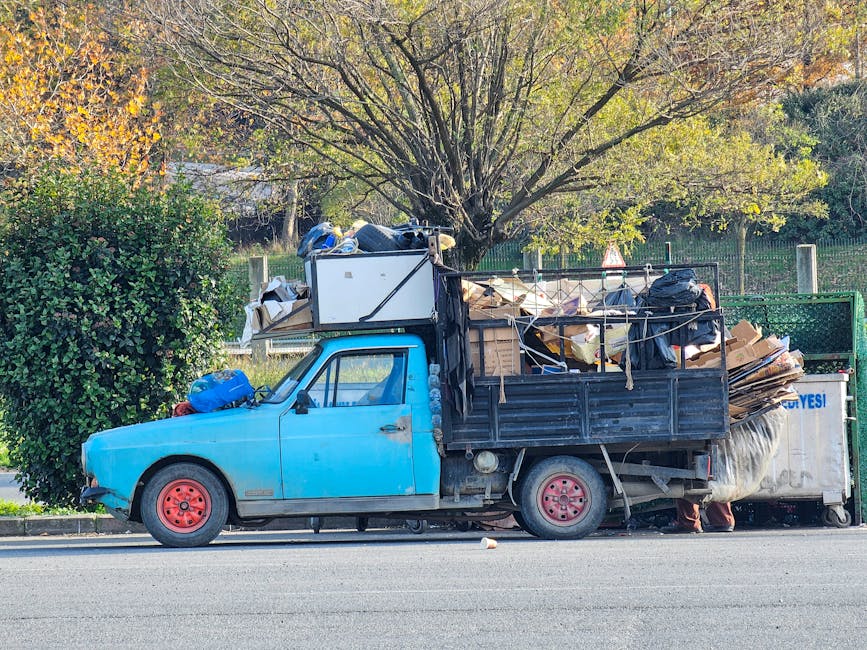
Hounslow Council rules for bulky waste collection explained
If you have an old mattress leaning in the hallway, a broken wardrobe in the spare room, or a washing machine that has finally given up with a clunk, bulky waste is one of those jobs that suddenly feels much bigger than it should. And, to be fair, it often is. Hounslow Council rules for bulky waste collection explained is about understanding what can be booked, what usually cannot go out, how to prepare items properly, and when a private clearance service may be the easier route.
This guide breaks the process down in plain English. You will get the practical steps, the common pitfalls, and the sort of real-world advice that saves time on collection day. If you are comparing options, it also helps to know what sits behind a professional service too, from who is handling the job to how items are dealt with responsibly. Let's face it, nobody wants to drag a sofa to the kerb twice.
Table of Contents
- Why Hounslow Council rules for bulky waste collection explained matters
- How Hounslow Council rules for bulky waste collection explained works
- Key benefits and practical advantages
- Who this is for and when it makes sense
- Step-by-step guidance
- Expert tips for better results
- Common mistakes to avoid
- Tools, resources and recommendations
- Law, compliance, standards, or best practice
- Options, methods, or comparison table
- Case study or real-world example
- Practical checklist
- Conclusion
- Frequently asked questions
Why Hounslow Council rules for bulky waste collection explained Matters
Bulky waste is not the same as normal household rubbish. Councils usually treat items like sofas, beds, wardrobes, tables, and white goods differently because they take up space, are awkward to lift, and may need special handling at the recycling or disposal stage. That is why the rules matter: they help keep collections safe, fair, and manageable for everyone involved.
For residents, the rules can feel a bit fiddly at first. Where does the item need to be left? Does it need dismantling? Can you book more than one item? What happens if the crew cannot reach the front door? These are the kinds of details that decide whether the collection goes smoothly or turns into a frustrating back-and-forth.
There is also a wider point. When bulky items are handled correctly, more can usually be reused, recycled, or processed properly. That is better for the street, better for the environment, and better than leaving a sofa outside in the rain because nobody was quite sure what the council expected. We have all seen that one item sat on a pavement too long, gathering damp and looking miserable. Not ideal.
Quick takeaway: The main value of understanding bulky waste rules is simple: prepare items properly, book the right service, and avoid missed collections, extra charges, or unsafe placements.
How Hounslow Council rules for bulky waste collection explained Works
In practical terms, bulky waste collection usually follows a fairly straightforward pattern. You identify the items, check what is accepted, book a collection, and put the waste out in the correct way on the agreed day. That sounds easy enough, but the small print is where people often stumble.
Most councils make a distinction between acceptable bulky household items and waste that needs a different route, such as hazardous materials, trade waste, or items contaminated with chemicals. If an item contains anything risky, heavy, wet, sharp, or potentially harmful, it may need a specialist solution rather than a standard bulky waste pickup.
Another thing to watch is access. A collection crew cannot always move items from inside tight lofts, narrow basements, or cluttered rear gardens without clear access. If they cannot safely lift it or get it to the vehicle, the collection may not happen. That is why planning matters more than most people expect.
In some cases, a householder may want a council collection because it is convenient and familiar. In other cases, especially where several rooms need clearing or items need to come from inside the property, a private service may be more flexible. If you are weighing up the practical side, pricing and quotes can help you compare the likely cost and convenience without guesswork.
One small but useful rule of thumb: if you are unsure whether an item is bulky waste or something else, check before booking. It is much easier to sort out the right path early than to discover on collection day that the item sits outside the accepted list. Bit of a headache otherwise.
Key Benefits and Practical Advantages
Following the bulky waste rules properly is not just about compliance. It gives you a cleaner, calmer process and helps avoid needless effort. Here are the main benefits people actually notice.
- Less stress on collection day: You know where items need to be and who is handling them.
- Lower risk of missed collection: Correct preparation reduces the chance of refusal or delays.
- Safer handling: Proper placement and sorting make lifting and moving easier for crews.
- Better environmental outcomes: Well-separated items are more likely to be recycled or reused.
- More predictable budgeting: You can compare council collection with a private service more sensibly.
There is another quiet benefit that people often miss: mental clarity. Once the old furniture is scheduled for removal, the room starts to feel usable again. You open the door and the space is there, waiting. Truth be told, that is often what people want most - not the waste taken away in theory, but their home back in practice.
If you are trying to keep your household moving without disruption, a clear process also makes family life easier. A spare bed can disappear before guests arrive, a broken freezer can be removed before it starts smelling odd, and a garage can become a garage again instead of a storage cave. Small win, but a real one.
Who This Is For and When It Makes Sense
This guide is for anyone in Hounslow dealing with items that are too large for normal bin collections. That includes tenants, homeowners, landlords, letting agents, property managers, and families helping older relatives clear a home after a move or downsize.
It makes sense to use council-style bulky waste collection when you have:
- one or two items that are easy to define and easy to access;
- limited time and you want a structured appointment;
- straightforward household items that clearly fit within accepted categories;
- a clear place to leave items for collection;
- no need for a full room-by-room clearance.
It may make less sense when the job is bigger or more complicated. For example, if you have a loft full of mixed items, a shed that needs emptying, or furniture scattered through several floors, a general bulky waste pickup may not be the smoothest option. In those situations, a broader service can be more practical because it deals with the work inside the property too, not just the items outside.
One common scenario: someone buys a new sofa, then realises the old one is too large to move alone, the stairs are narrow, and the lift is out of action. That is exactly when the difference between a simple collection and a managed clearance becomes obvious.
Step-by-Step Guidance
Here is a sensible way to handle bulky waste without making the process harder than it needs to be.
- List the items clearly. Write down exactly what needs to go. "Old furniture" is too vague; "three-seat sofa and two dining chairs" is better.
- Check whether the items are accepted. Separate ordinary bulky household waste from anything hazardous, electrical, or specialist.
- Measure and inspect access. If the item must pass through a hallway, gate, or stairwell, check the route before collection day.
- Prepare the items. Remove loose contents, detach shelves if practical, and tape drawers shut if they might fly open mid-lift. Nobody wants a drawer rolling across the path.
- Choose the right collection option. If it is a couple of items and access is straightforward, a bulky waste collection may be enough. For larger or mixed jobs, consider a fuller service.
- Leave the waste exactly where instructed. This is usually the bit people rush. Make sure it is accessible, visible, and not blocking neighbours or the pavement.
- Keep photos and booking details. If something goes wrong, having a record helps clear up confusion quickly.
If the item is especially awkward, think a step ahead. A wardrobe may need doors removed. A bed frame may need slats detached. A washing machine may need hoses disconnected. Nothing dramatic, just enough preparation to stop a ten-minute job turning into forty-five minutes and a sore back.
For households wanting a more flexible arrangement, especially with multiple bulky pieces, it can help to review health and safety expectations and insurance and safety information before choosing who to trust with the lift and removal work.
Expert Tips for Better Results
A few small decisions make a large difference on the day. These are the habits that tend to separate a smooth collection from a slightly chaotic one.
- Group items by type. Put furniture together, electrical items together, and anything sharp or loose in a separate category.
- Break down what you safely can. Flat-packed pieces, bed frames, and modular furniture are often easier to move once disassembled.
- Keep pathways clear. Even a hallway that looks "mostly clear" can become awkward if there is a plant pot, bike, or shoe rack in the way.
- Check for hidden contents. Kitchen units, bedside cabinets, and old desks often have papers, batteries, or forgotten junk inside.
- Do a final walk-through the evening before. It takes five minutes and can save a missed item or a misplaced booking note.
Another useful tip: if your property has awkward access, say so early. A narrow staircase or shared driveway is not a minor detail. It shapes the whole job. Being upfront usually means the right equipment and enough people turn up, which is what you want.
And yes, sometimes the "best" route is the one that looks slightly less convenient at first. A private clearance can cost more than a basic council-style collection, but if it removes uncertainty, clears several rooms, and avoids you spending a Saturday wrestling with a broken fridge, the trade-off may be worth it.
Common Mistakes to Avoid
Most bulky waste problems come from a handful of avoidable mistakes. They are simple, really, but easy to make when you are in a hurry.
- Leaving items in the wrong place. If the crew cannot see or safely reach the waste, the job may be missed.
- Mixing accepted and non-accepted items. One prohibited item can complicate the whole collection.
- Assuming all bulky waste is the same. A sofa, a fridge, and rubble are not treated the same way.
- Forgetting about access restrictions. Tight stairs, locked gates, parking problems, or shared entrances can all cause delays.
- Booking too late. If the move-out date is close, avoid leaving the booking to the last minute.
- Not checking fees or terms. If a service is paid, read the conditions carefully so there are no surprises.
A surprisingly common one is this: people clear the item from the room, then stack it in a place that blocks the driveway or the fire exit. It seems tidy until it is not. Better to plan the collection point properly from the start.
Another small one, and it happens more than you would think: someone books the collection, then forgets they moved the items to the back garden and locked the side gate. That is a very human mistake, but it can still derail the day. We all do it.
Tools, Resources and Recommendations
You do not need specialist equipment for every bulky waste job, but a few basic tools make a real difference.
- Measuring tape: useful for checking door widths, stair turns, and item dimensions.
- Screwdriver or Allen key set: handy for taking apart beds, shelving, or flat-pack furniture.
- Heavy-duty gloves: worth having for sharp edges, splinters, and awkward grips.
- Strong bin bags or boxes: useful for loose contents removed from furniture.
- Phone camera: quick photos help with booking notes and proof of item condition.
On the planning side, the most useful resources are often the ones that help you decide which route to take. If your job is simple, a council collection may be enough. If it is broader, compare the practicalities against a full clearance. You can also review pricing and quotes alongside terms and conditions so you know what is included before you commit.
For people who care about the end result rather than just the removal, recycling and sustainability is worth a look. In real life, the smartest choice is often the one that clears the mess and handles the waste responsibly at the same time.
Law, Compliance, Standards, or Best Practice
When dealing with bulky waste, the main compliance point is simple: items should be presented safely, honestly described, and disposed of through an appropriate route. Councils and responsible clearance providers generally expect households to separate hazardous items from ordinary bulky waste and to avoid leaving anything that could cause harm to staff, neighbours, or passers-by.
UK waste handling also has a strong duty-of-care element in practice. That means waste should be managed in a way that reduces risk and supports proper disposal or recovery. You do not need to become a legal expert to follow that principle. Just avoid hiding batteries in drawers, mixing chemicals into ordinary waste, or dumping items in places where they could cause obstruction or nuisance.
Best practice is also about transparency. If you are arranging removal through a third party, it helps if the service is clear about safety, payment, and what happens to the waste after collection. For added reassurance, many people like to check a provider's payment and security details and read the modern slavery statement and privacy policy. That may sound a bit formal for a sofa removal, but it shows how a business thinks.
Special care is sensible for mattresses, fridges, electricals, and anything with sharp edges or hidden contents. If in doubt, ask before placing it out. Better to look slightly over-cautious than to create a problem on the pavement outside your home.
Options, Methods, or Comparison Table
Most people deciding how to remove bulky waste end up comparing two main routes: council collection or a private clearance service. Both can work. The better option depends on the size of the job, access, timing, and how much involvement you want.
| Option | Best for | Typical strengths | Possible drawbacks |
|---|---|---|---|
| Council bulky waste collection | Small numbers of straightforward household items | Simple for residents, familiar process, suitable for one-off items | Less flexible for access issues, mixed loads, or larger clearances |
| Private house clearance | Multiple rooms, urgent clearances, awkward access, or mixed items | More flexible, broader scope, can remove items from inside the property | May cost more depending on the job and level of service |
| Self-removal to a facility | People with transport, time, and the ability to lift safely | Direct control, useful for some smaller loads | Time-consuming, physically demanding, and not ideal for large items |
There is no single right answer. For one heavy chair and a dismantled desk, a collection service may be perfect. For a whole property reset after a tenancy change, a fuller clearance is often the saner option. Saner, not shinier. Big difference.
Case Study or Real-World Example
Here is a realistic example from the kind of situation many households face.
A family in Hounslow had replaced a living room suite and also wanted to get rid of an old chest freezer, two bookshelves, and a broken coffee table. At first, they assumed everything could simply be placed outside together. Then they noticed the freezer still had a few items inside, the bookshelves were too tall for the side gate, and the hallway was narrowed by a pushchair and a boot rack. Classic, really.
Rather than leaving it to chance, they sorted the items by type, emptied the freezer, measured the route, and removed the shelves from the bookcases. Once the access was clear, the collection became much more straightforward. The house felt calmer before the items even left, which is often how it goes. The clutter is not just physical; it makes the whole place feel busier than it needs to be.
The lesson is simple: a little preparation can turn a stressful bulky waste problem into an ordinary household task. Not glamorous, but very effective.
Practical Checklist
Use this quick checklist before your bulky waste collection or clearance booking.
- Have I listed every item clearly?
- Do I know which items are accepted and which may need a different service?
- Have I emptied drawers, cupboards, and hidden compartments?
- Have I measured access points such as gates, stairs, and doorways?
- Is the collection point clear, visible, and safe to reach?
- Have I removed obvious hazards like loose glass, sharp fixings, or leaking contents?
- Do I understand any fees, conditions, or timing requirements?
- Have I taken photos in case I need to refer back to the booking details?
- Is there parking or loading access to consider?
- Do I need a fuller clearance rather than a simple pickup?
If you can tick most of those boxes, you are in good shape. If not, take ten minutes and sort the gaps. It is usually worth it.
For residents who want a cleaner handover after removing bulky waste, the next sensible step can be to speak with a team that understands both removal and responsible handling. You can start with contacting the team if you want to discuss the job in a straightforward way.
Conclusion
Hounslow Council rules for bulky waste collection explained comes down to one idea: know what you have, prepare it properly, and choose the right route for the size of the job. That approach saves time, avoids missed collections, and makes the whole process feel much less annoying than it sounds on paper.
For a small number of acceptable household items, a council-style collection can be a neat solution. For bigger, messier, or harder-to-access clearances, a broader house clearance service may be the calmer, more practical choice. Either way, a little planning makes the difference.
Get a free quote today and see how much you can save.
If you are still weighing things up, that is completely normal. Most people are not thinking about waste rules until the sofa is already blocking the hallway. Once you know the basics, though, the rest becomes manageable - and a lot less of a nuisance.
Frequently Asked Questions
What counts as bulky waste in Hounslow?
Bulky waste usually means large household items that do not fit in normal bins, such as furniture, mattresses, and some white goods. If an item is unusually heavy, awkward, or too large for standard collection, it may fall into this category.
Can I leave bulky waste outside my house the night before collection?
Only if the instructions for your collection say that is acceptable. In general, items should be left exactly where requested and not placed in a way that blocks pavements, driveways, or neighbours.
Do I need to dismantle furniture before a bulky waste pickup?
Not always, but dismantling can make collection safer and easier, especially for large wardrobes, bed frames, and shelving units. If the item is too awkward to move intact, breaking it down is often helpful.
What items are usually not accepted with bulky waste?
Hazardous materials, chemical containers, trade waste, and some specialist items may not be accepted in a standard bulky waste collection. If you are unsure, check before booking so you do not end up with a refused collection.
What should I do with electrical items like TVs or microwaves?
Electrical items often need separate handling depending on the collection route. Some can be included in a bulky waste booking, while others may need a different disposal method. It is worth confirming in advance.
Is a private house clearance better than a council bulky waste collection?
It depends on the job. For a few straightforward items, a council collection can be enough. For mixed loads, tight access, or full-property clearances, a private service is often more practical.
How should I prepare a mattress for collection?
Make sure it is dry, accessible, and free of hidden items or bedding. If your collection instructions mention a specific wrapping or placement method, follow that closely.
What happens if the crew cannot access the items?
If access is blocked or unsafe, the collection may be missed or delayed. That is why checking gates, pathways, parking, and entry points beforehand is so important.
Can bulky waste be recycled?
Some bulky items can be reused or recycled depending on their condition and material type. Furniture, metal, wood, and certain appliances may be handled in different ways once collected.
How do I know whether I need one item removed or a full clearance?
If you only have one or two large items, a collection may be enough. If you are clearing several rooms, dealing with mixed items, or need help inside the property, a fuller clearance is usually the better fit.
What is the safest way to move heavy bulky waste?
Use proper lifting technique, clear the path first, and do not attempt heavy lifting alone if the item is awkward or unstable. If in doubt, let trained movers handle it. Back injuries are not a badge of honour.
Where can I get help if I am still unsure?
If the rules, access, or item type are unclear, it helps to speak to a service that can assess the job properly. A short conversation now can save a lot of stress later, which is usually the better trade.